
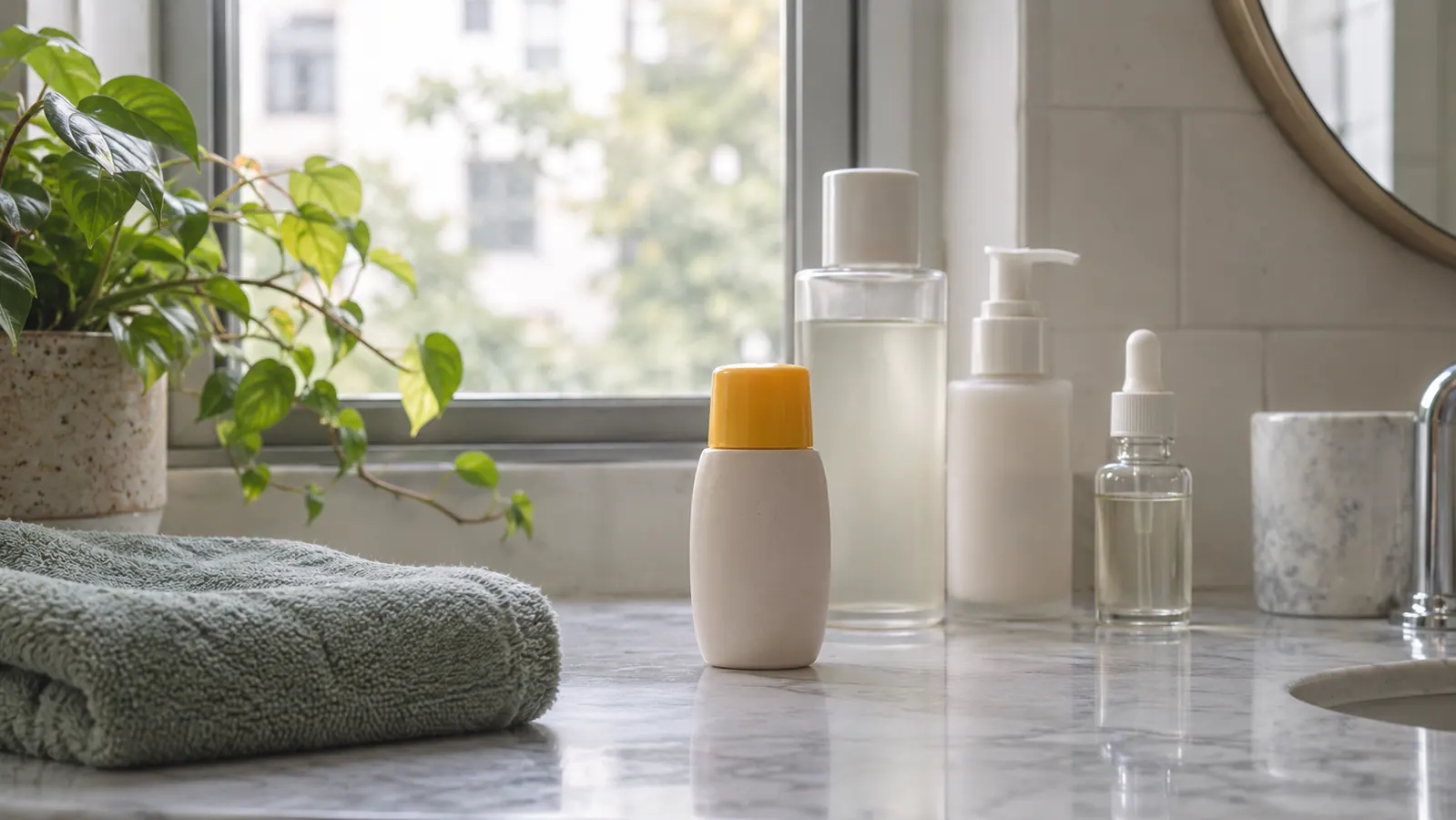
For about twenty years I wore sunscreen the way I wore a seatbelt in a parking lot. Only when I thought I might need it. Summer, the lake, a long walk with no shade. The rest of the year my face got whatever the Spokane sky handed out and I did not think about it once. The sunscreen I owned back then had no brand I could name today. It stung my eyes so badly that I would stand at the bathroom sink blinking and muttering, and by August I had usually stopped bothering. Then in January a close-up photo from my sister Patty's birthday dinner landed in the family group text. My cheeks looked dry and papery, and the age spot on my left cheek was right there in the light. That was the whole alarm bell. No doctor, no diagnosis, just a photograph I could not unsee. What goes on my face now, every single morning, is La Roche-Posay Anthelios Mineral Light Fluid.
So I started reading labels the way I used to read a chart before a patient's first visit, line by line, and I bought one product at a time so I could tell what was doing what. Nine months in, the La Roche-Posay Anthelios Mineral Light Fluid, SPF 50, the small 1.7 ounce bottle, is the only step I have not missed since the first week of February. I am not going to tell you it erased a line or faded the spot on my cheek, because it did not and sunscreen is not that. What I can do is tell you the five questions I now ask before anything goes on my face, and answer them honestly for the one I landed on.
The bottle I have used every single morning since February
La Roche-Posay Anthelios Mineral Light Fluid is SPF 50, 100% mineral with zinc oxide and titanium dioxide, unscented, and water resistant for 40 minutes. It goes on last, after the vitamin C and the moisturizer, on my face and my neck.
Amazon Check Today's Price on Amazon →Step 1: Decide mineral or chemical before you look at anything else
This is the first fork in the road and it took me years to understand it was a fork at all. Chemical sunscreens use filters that soak into the skin. Mineral ones use zinc oxide and titanium dioxide, which sit on the surface. I am not a chemist and I am not going to pretend the difference is dramatic for every person alive. For me it was dramatic in one specific place, and that place was my eyes.
The unnamed sunscreen I used to keep in the car made my eyes water within minutes. Every year I would put it on, blink for ten minutes, and quietly stop using it by the middle of July. The La Roche-Posay bottle lists zinc oxide and titanium dioxide and no chemical filters. I put it on in February, walked thirty minutes in the cold, and my eyes did not sting. That has held for nine months. The reason I still have the bottle is not that it feels luxurious. It is that I actually wear it.
If your eyes water with every sunscreen you try, start here. Read the active ingredients on the back, not the promise on the front. Zinc oxide and titanium dioxide means mineral. Anything else means chemical. You may do perfectly well with chemical filters, and plenty of people do. But if you have spent twenty years avoiding sunscreen because it makes you cry at the sink, this is the variable worth changing first.
Step 2: Read the label for what is not in it
Once I settled on mineral, I started reading the rest of the label the way I read a nutrition panel, which is to say suspiciously. Fragrance is the first thing I look for. My cheeks are dry and mildly sensitive, and a scented product sitting on top of a vitamin C serum is a gamble I do not need to take. The Anthelios bottle says unscented on the front, and the listing lists sensitive among the skin types it is meant for. It does not smell like anything to me, and my face has not reacted to it once in nine months.
The second thing I check is whether a product claims to do too much. Sunscreen has one job. When a label starts promising firming, brightening and pore refinement in the same breath as sun protection, I set it down. This one lists antioxidant, hydrating and non-comedogenic among its benefits, and I treat all of that as a bonus rather than a reason to buy. The reason to buy is the 50.
Third, I look at where the label says it goes. The listing says face and neck, which sounds obvious until you notice that most of us stop at the jaw. My neck is where the dryness shows first and where I was burning through product fastest. Once I started bringing it down my neck every morning, the small bottle started going faster than I expected, and I would rather know that going in.
Step 3: Test the finish in daylight, not bathroom light
The bathroom light in our house is flattering in a way that has never done me a single favor. I have bought two things in my life that looked fine at the mirror and wrong the minute I got outside. So now I test in daylight, by the window, before I decide anything about a product. With a mineral sunscreen this matters, because mineral filters can leave a cast if they are not worked in properly.
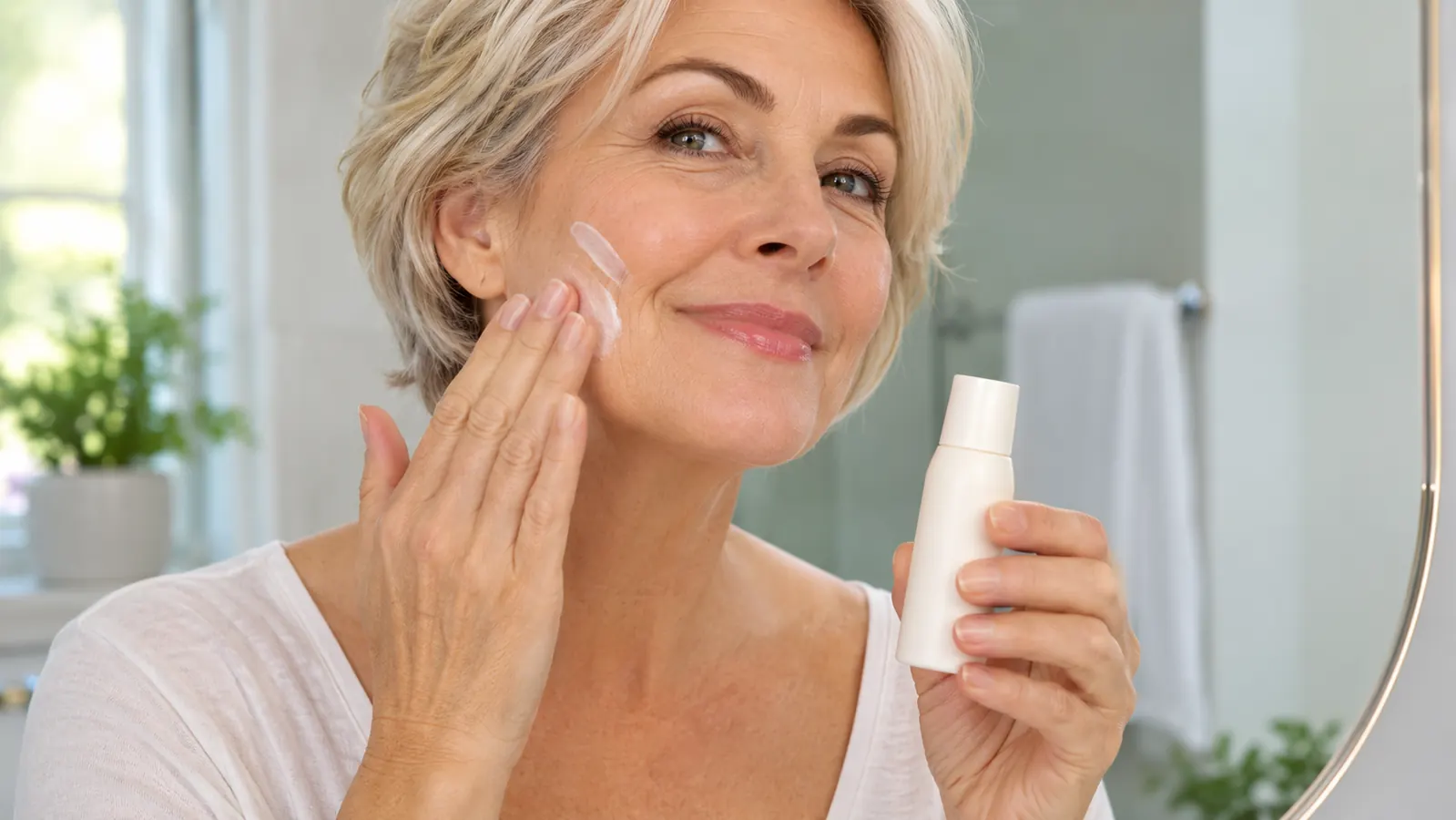
The first week I used this one, I rushed it, and I could see it. Not dramatically, but a faint cast along my jaw, like I had not quite finished blending something in. By the second week I had the method down. I shake the bottle, put small amounts on my forehead, each cheek, my chin and my neck, and press them in one section at a time instead of smearing one big blob everywhere. Then I wait a couple of minutes before I walk out the door. Rushed, it shows. Handled that way, it does not.
The finish on me is matte, which suits a woman who is dry on the cheeks and does not want to look like she has been basting. If your skin is oilier, matte is probably welcome too. If you are very dry, put it on over your moisturizer and give the moisturizer a minute to settle first. I have no complaint about how this looks once it is on. I have a complaint about how it looks when I am careless, and that is a different thing entirely.

Step 4: Match the texture to your morning and your season
The La Roche-Posay fluid is light, and that word matters more than it sounds. A heavy cream at seven in the morning, on a face that already has moisturizer on it, under a hat or makeup, is a lot of layers to carry around. A fluid sinks in and lets you get on with the day. I put on the vitamin C serum, wait about a minute, put on the eye cream and the Olay, then this on top as the last step. It has not once pilled up on me or rolled off in little balls, which is more than I can say for one product I tried and then gave away.
The listing says water resistant for 40 minutes. I am not a swimmer, so what that means in my actual life is that a walk in the heat or a few minutes of pulling weeds does not immediately undo it. It is not a day at the lake product in my mind. It is a Tuesday morning product, and most of my life is Tuesdays.
The tradeoff, and I will say it plainly, is that the bottle is small. A 1.7 ounce bottle on a face and a neck every single morning goes faster than you would like. It also costs more than the drugstore sunscreen in the grocery aisle. I have decided that is worth it, because I wear this one and I did not wear the cheap one. That is the whole argument.
Step 5: Make it the last step and stop negotiating with yourself
Here is the thing I got wrong for two decades. I treated sunscreen as a summer decision. Something I weighed fresh each morning based on the color of the sky. What changed this year is that I stopped weighing it. It is the last step in my morning routine, after the cleanser, the vitamin C, the eye cream and the moisturizer, and it happens every day including the grey ones, including February in Spokane, including the mornings I am running late.
That sounds rigid and it is. It is also the only reason nine months have passed without a gap in it. The old me would have looked out the window, decided it was cloudy, and skipped it four days out of seven. Now I do not look out the window until it is already on. The bottle sits on the top shelf of the medicine cabinet in the upstairs bathroom, right where I cannot miss it, and it is the last thing I reach for before I go downstairs.
One more thing I would tell anyone starting out. Buy one thing at a time and give it a few weeks. When I began in February I could have bought an entire shelf of products and would not have been able to tell you which one was doing what. Because I added them one at a time, months apart, I know exactly what I owe to what. I bring the La Roche-Posay down my neck, I wear a hat when I walk, and I keep my yearly skin check with my dermatologist. Anything new that shows up, a spot that changes, a patch that does not heal, goes to her and not to a review. Sunscreen is not a treatment. It is a habit, and mine is finally in place.
What Else Helps
A hat. This is the least expensive thing in this entire article and it does more than any bottle on the shelf. I walk about thirty minutes most mornings, year round, and since February I have worn a wide brim hat on the sunny ones. I also moved my walk earlier in the summer, which was less about skincare and more about the fact that Spokane at two in the afternoon in July is not a reasonable time for a woman my age to be outside.
If someone told me I could keep only one thing from my morning routine, I would keep the La Roche-Posay and give up the rest without much arguing. The other steps matter less, and I want to be honest about that. The Olay is what stopped my cheeks feeling tight, and that happened within about two weeks, which was the first change I noticed from anything. The CeraVe retinol is slow. It flaked beside my nose for a couple of weeks in March and by June my skin felt smoother to the touch. The TruSkin vitamin C is the one I credit for the spot on my left cheek looking a little lighter by late June, though it did not go anywhere. The Clinique eye cream helped the dryness under my eyes and did nothing at all for the dark circles. None of them work the way the label implies. All of them are easier to keep up with when I am not fighting with my sunscreen every morning.
Nine months, every morning, including the cloudy ones. The only thing that changed at the start is that I stopped flinching at the sink.
If your eyes are the reason you skip sunscreen, start here
SPF 50, 100% mineral with zinc oxide and titanium dioxide, unscented, water resistant for 40 minutes, 1.7 ounces for face and neck. It is the last thing I put on every morning and the only step I have not missed since February.
Amazon Check Today's Price on Amazon →