

The photo from my sister Patty's birthday dinner in January is why I am writing any of this. Somebody took it close up, from the side, in that restaurant light that shows everything. There on the screen were my dry cheeks and the age spot on my left cheek, both plainer than I had ever seen them. Nothing dramatic happened that night. I did not have a moment. I looked at the picture, thought, well, that is what I look like now, and then thought, I could do one small thing about that. CeraVe Resurfacing Retinol Serum was the third thing I added this year, the first week of March, and it is the one I have trusted slowest and had the most to say about.
I am 59. I retired after 27 years as the office manager of a dental practice, and I live in Spokane, where the winters are dry and the summers are sunny and neither one is kind to a fair face. My skin is dry on the cheeks and mildly sensitive. I have fine lines around my eyes and my mouth, crepey skin under the eyes, and that one spot. I have never had an injection, a laser, or a peel. I read labels. I start one product at a time. And I try not to promise anybody anything, including myself.
The Quick Verdict
A patient retinol that flaked beside my nose for two weeks and then, by month three, made my skin feel smoother than it has in years. Slow. Unremarkable in the best way. Worth the wait if you have already waited this long.
Amazon Check Today's Price →The retinol I started at two nights a week
Fragrance free, one ounce, and gentle enough that I never had to stop and restart. Eight months in, I still use it every other night.
Amazon Check Today's Price on Amazon →How I've Used It
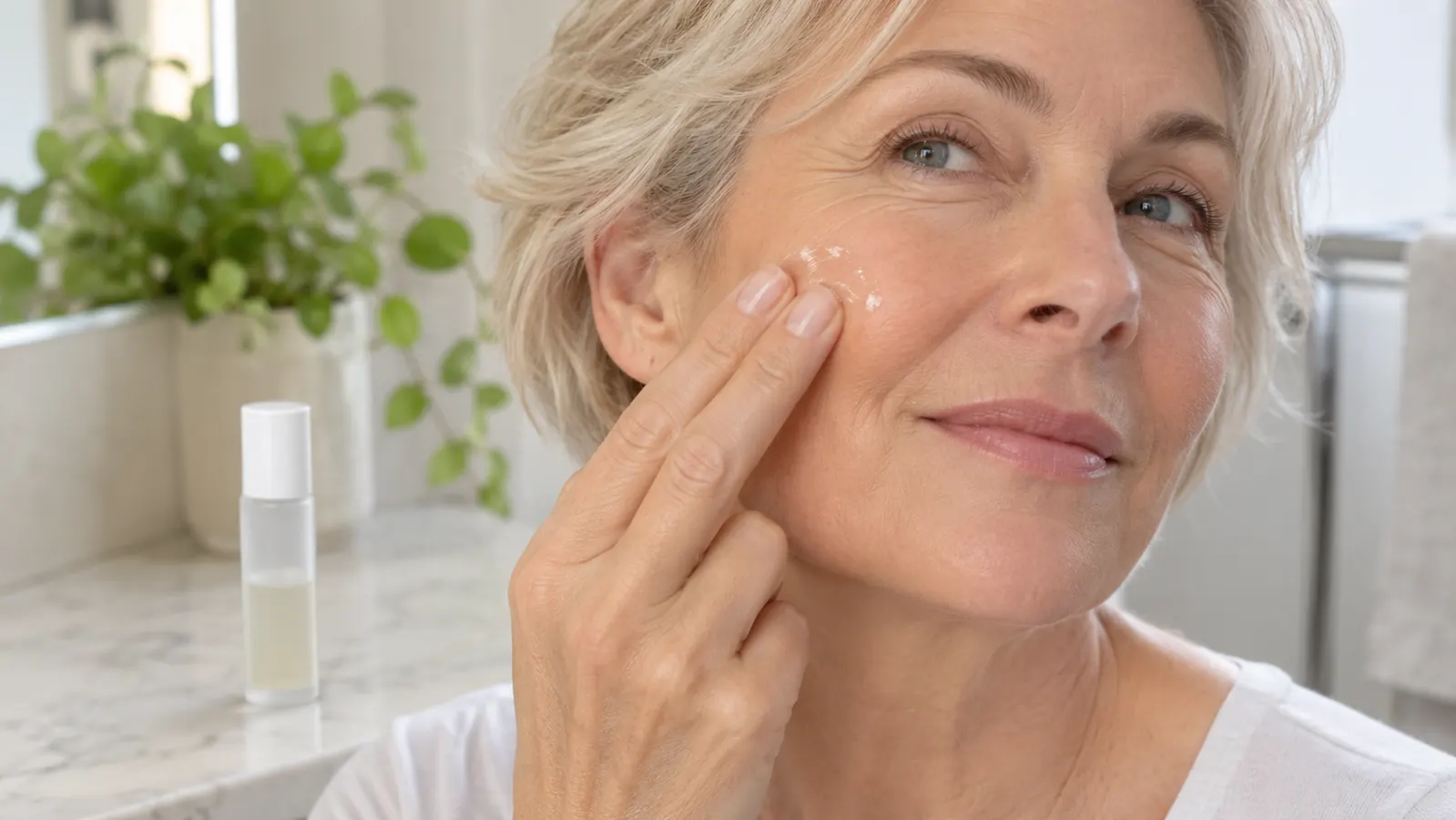
This was my first retinol. Ever. Not my first in a while, my first. I had read enough to be nervous about it, and nervous is the right way to be when you are 59 with dry cheeks and skin that has thinned out some. So I went slower than the packaging suggests. The first four weeks I used it two nights a week, Tuesday and Friday, and nothing else. A thin layer over the whole face, and I stayed well away from my eyes and my lips. Then I stopped and waited, which is the part I am not good at.
The first night was a Tuesday in March, and I stood at the mirror holding the serum longer than a grown woman should. What I had read said a pea-sized amount for the whole face, so I measured it out on the back of my hand first, because I did not trust myself to be conservative once I was at the mirror. I went around my cheeks, my forehead, my chin, and then I stopped at the jaw, because I had read that the neck can be more sensitive and I wanted one variable at a time. My neck did not get a drop of it until June, and even now it only gets whatever is left on my fingers.
From April on I moved to every other night, and that is where I still am. I have never used it every night. I am not sure I ever will. A thin layer is enough. The times I have used more than a thin layer, out of some vague feeling that more must be better, my skin has told me about it the next morning in a way I did not enjoy.
It is night only in my house. Cleanser, then the serum, then I wait for it to go in and stop feeling wet, then the Clinique eye cream, then the Olay. No vitamin C at night and no sunscreen at night. The morning order is different and the retinol is not in it. Keeping the two apart is the single most useful thing I have done with my routine this year, and it took me until about May to be consistent about it.
What the Label Actually Says
The label lists encapsulated retinol, niacinamide, licorice root extract, and three ceramides, which it names as 1, 3, and 6-II. It says fragrance free, and it says non-comedogenic. There is one ounce of it. The skin types listed on the listing are acne prone and mature, a combination I would not have thought to put together until I read it, and which turns out to describe about half the women I know.
I read the whole label at the kitchen table with my reading glasses on, which is how I read everything now. What I was looking for was alcohol and fragrance, because those are the two things that have set my cheeks off before, and I did not find either one listed. CeraVe names the ceramides by number, which I appreciate more than I expected to. A label that says exactly what is in the bottle is a label I am more inclined to believe about everything else on it.
Here is the part I want to be straight about, because it matters. This serum is marketed for post-acne marks and pores. The listing calls it a pore minimizer. I have never had acne, not as a teenager, not since. I did not buy it for marks or for pores. I bought it for texture, because my cheeks had gone rough and dull and I wanted something for that, and this was the retinol that kept coming up when I looked for one that would not leave my face angry.
So I am not the customer this was designed for, and I want that on the record before I say anything good about it. What I can tell you is what it did for texture on dry, mature, mildly sensitive skin. That is not the same claim the box makes. It is the only claim I have any business making, so it is the one I am going to make.
What Changed, and When
Weeks two and three were not pretty. Some flaking beside my nose, in the creases, the kind you can see in a hallway mirror and feel when you wash your face. It was not a burn. It was not redness all over. It was flakes, in one place, and it stopped on its own by week four without my changing a thing.
Then nothing happened for a while. That is the honest middle of this story and nobody writes about it. April and May went by and I could not have told you the product was doing anything at all. I kept going because the flaking had settled and my skin was not irritated, and because I had read that retinol is a months-long thing and not a weeks-long thing. I did not enjoy those two months.
By about June, three months in, my cheeks felt smoother under my fingers. That is the thing I noticed, and it is the thing I would still name if you asked me today. Not softer lines. Smoother skin. The fine lines around my eyes and my mouth look a little softer than they did in March. A little. Not gone. I do not expect them to be gone and I would not believe anybody who told me theirs were.
There is one morning out of the whole eight months that I remember by name. It was the middle of June, a Saturday, and I was washing my face at the sink and my hand went across my left cheek and stopped. It felt like a different cheek. Not tight, not rough, just smooth, the way it felt in my thirties before a couple of decades of Spokane winters got to it. I stood there with soap on my face like an idiot and then I laughed at myself in the mirror. That was the entire payoff for three months of patience, and I would do it again.
The age spot on my left cheek is not what this did. The TruSkin vitamin C got to that, later, and even then only partly. I am mentioning it because it would be easy to hand the retinol credit for everything that changed this year, and it does not deserve it. It got my texture. That is enough.
By about June, three months in, my cheeks felt smoother under my fingers. Not younger. Smoother. That is the whole result, and I will take it.
The Flaking Weeks
I want to give the flaking its own section, because it is the thing that makes people quit and I understand why. If you start this every night, which the box does not tell you to do but which a lot of us do anyway because we are impatient, you will probably flake more than I did, and you will decide it is not for you, and you will be wrong about the product rather than wrong about the schedule.
The first thing I tried was more moisturizer, and it did not work the way I wanted it to. I put a heavier layer of Olay over the flaky patch beside my nose and it just made the flakes look worse for an hour or two before it soaked in, because cream sitting on top of flakes does not remove flakes. What actually helped was backing off. I skipped the Friday one week and gave my face four nights off in a row, and by the Monday the patch had settled down on its own. That is not a heroic story, but it is the true one, and it is cheaper than buying a second product to fix the first one.
What worked for me was less product and fewer nights, not more moisturizer on top, though I did add a little of that too. Two nights a week is not a lot. It feels like nothing. It is also enough to get your skin used to it, so that by the time I went to every other night in April, my face had already been through the worst of it back when the dose was smaller.
If your face stings, or burns, or goes red and stays red, that is not flaking and it is not something to push through. Stop and ask a dermatologist. I have one skin check a year and I would not guess at a rash on my own face, and I would not suggest you guess at one on yours. Flaking in one spot that settles down is a different thing from a reaction, and you will know which one you are having.
How It Fits With the Rest of My Routine
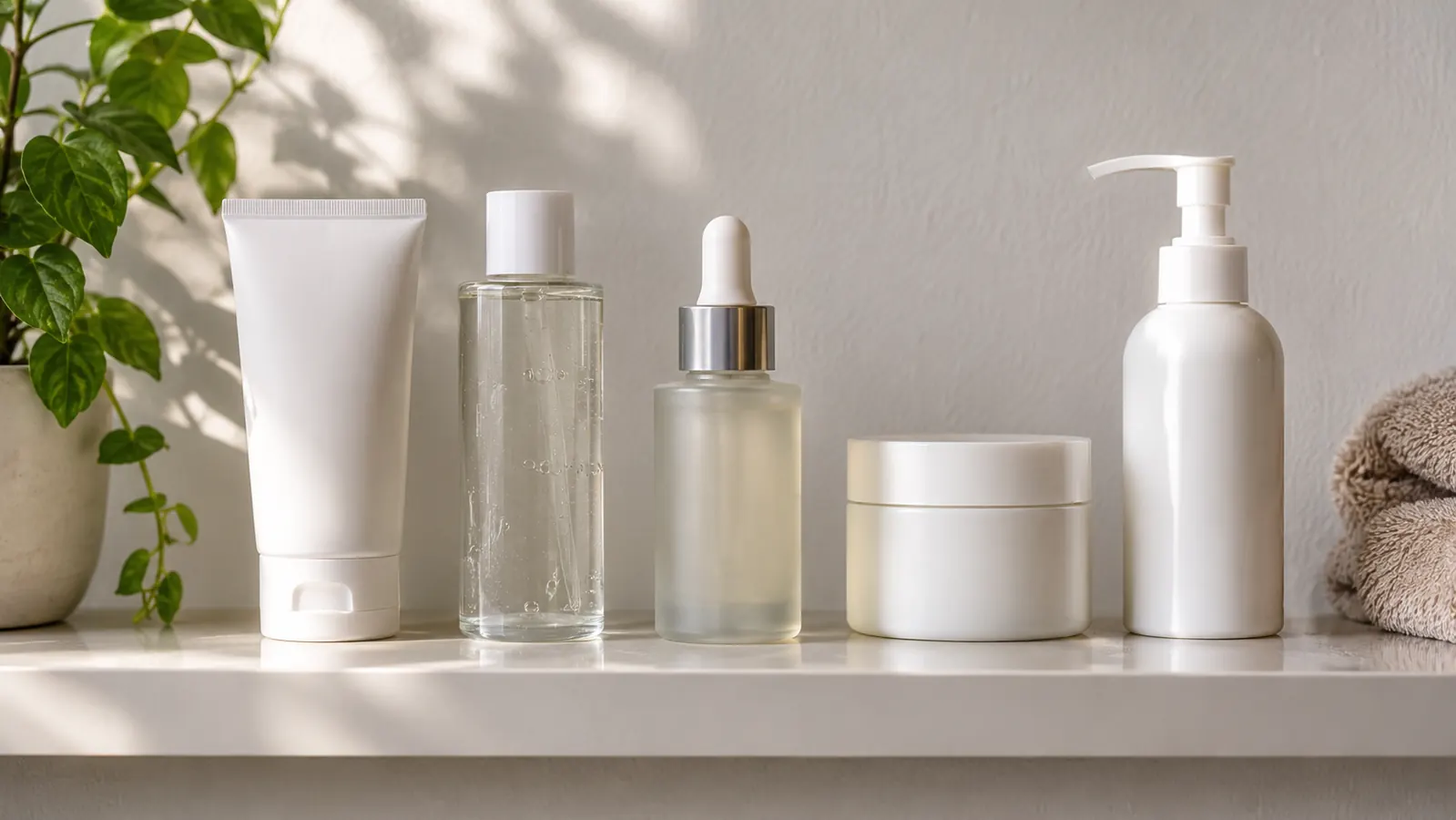
The retinol is for texture. The TruSkin vitamin C in the morning is for brightness and the spot. The Olay is for dryness, and that is the one that made the first difference I noticed, back in February, when my cheeks stopped feeling tight. The La Roche-Posay mineral sunscreen goes on last every morning, year round, including the cloudy ones in Spokane in December. The Clinique eye cream is the only thing that goes near my eyes.
I started writing CeraVe nights on the kitchen calendar in April, which sounds excessive until you have stood at the medicine cabinet at nine at night trying to remember whether last night was a retinol night. CeraVe night or plain night, it is written down now, and I have not doubled up by accident since. For a woman who once took a whole semester of night classes while working full time, you would think I could hold a two-night schedule in my head. I could not.
The sunscreen is not optional with this. Retinol and sun do not get along, and I am outside walking about 30 minutes most mornings. If you take one thing from this piece, take that one. A retinol without a daily sunscreen is a waste of eight months, and it is not the serum's fault.
Everything sits on the top shelf of the medicine cabinet in the upstairs bathroom. Five things, in a row, in the order I use them. That is the entire system. I do not have a shelf of half-finished bottles and I am not going to build one.
What I Liked
- My skin felt smoother by month three, and it has stayed that way
- Fragrance free, and it never stung or burned, only flaked in one spot
- Two nights a week was enough to start, so I never had to quit and restart
- The label is honest about what it is for, even if that is not what I bought it for
Where It Falls Short
- Weeks two and three of flaking beside my nose, which will scare off anyone who starts too fast
- Nothing visible happens for about two months, and I do not blame anyone who gives up in April
- It is sold for post-acne marks and pores, so the reasons I use it are not on the box
- It only works if you wear sunscreen every single day, which is its own commitment
Who This Is For
This is for a woman roughly my age who has never used a retinol and is a little afraid of one. If your skin is dry, mildly sensitive, thinning out a bit, and you want something for texture and you are willing to go slow, this is a reasonable place to start. It is also for the person who has started a retinol before, flaked, and quit in week two. Two nights a week is the fix for that. I know because it was the fix for me.
And it is for someone who can live with a product that does not announce itself. CeraVe did not change my face in a way anyone else would notice. I notice. My fingers notice when I wash my face. That is the size of the thing, and if that sounds too small to bother with, it probably is too small for you.
Who Should Skip It
Skip it if you want to see something by the end of the month, because you will not, and you will decide it failed when it was only being slow. Skip it if you have active acne or a lot of marks, not because it will hurt you but because there are products aimed squarely at that and this one is only half aimed at it. Skip it if you are not going to wear sunscreen every day.
And if your skin is stinging, burning, or reacting rather than flaking, that is a dermatologist question, not a serum question. I am not a doctor and I am not going to pretend to be one. I am a retired office manager with a mirror, a label, and eight months of notes.
Eight months in, still every other night
If you have been meaning to start a retinol and keep putting it off, this is a patient one to start with. Two nights a week, a thin layer, sunscreen in the morning.
Amazon Check Today's Price on Amazon →