
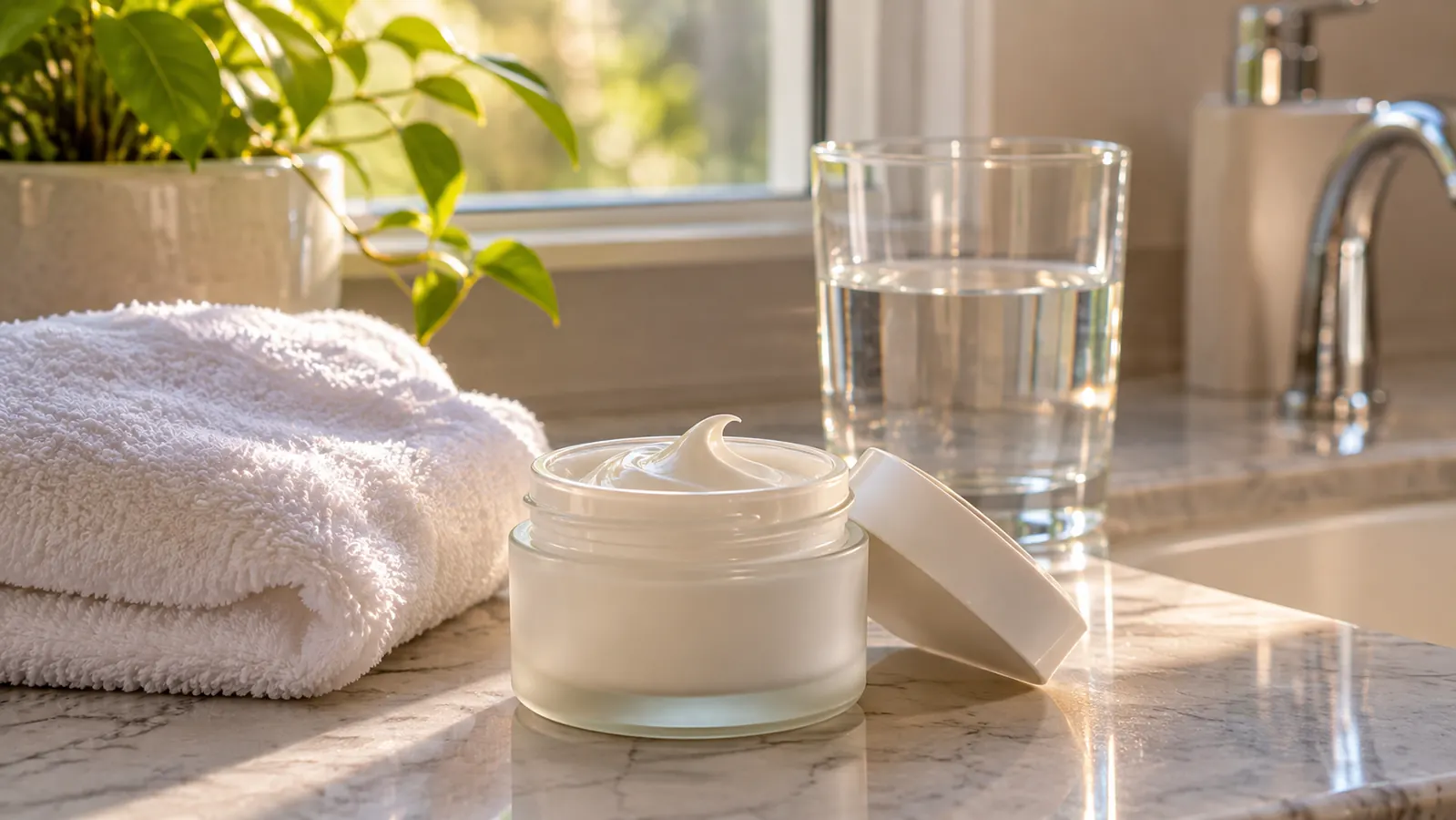
The first thing I noticed was not a line and not a spot. It was the tightness. My cheeks felt like they had been washed with dish soap, rough under my fingers, worse right after a shower and worse again by three in the afternoon. Spokane in February will do that to a face. I had a plain drugstore lotion sitting by the sink that I used when I remembered, which was not often, and for a couple of years I had been telling myself that dry skin was just what happened after fifty.
What got me moving was a photograph. Patty turned sixty-two in January, and at her birthday dinner somebody took a close-up of the two of us under the restaurant lights. Nothing dramatic happened in that picture. I just saw my cheeks, dry and a little flaky along the jaw, and the age spot on my left cheek that I had been half ignoring, and I thought, that is what people see. So I did one small thing instead of a big overhaul. I bought a face cream. Olay Regenerist Micro-Sculpting Cream, the one in the jar, because I had stood in the aisle and read the label twice and the ingredients were the ones that kept turning up in everything I read: niacinamide, peptides, hyaluronic acid. That was the entire plan.
I want to be straight with you about what a moisturizer does, because the labels are not straight about it. A cream holds water in the outer layer of your skin and makes it feel less tight. That is a real thing and it is worth having. It is not a treatment for a condition, it does not erase lines, and it does not lift anything. If your skin is cracked, bleeding, itching badly, or covered in a rash that will not settle, that is a dermatologist appointment and not a jar. I say that as someone with one skin check a year and no interest in guessing.
I started with one product and added the next one a month later, and I would do it that way again. If you change four things in a week and your face calms down, you have no idea which one did it. If you change four things and your face gets angry, you have no idea which one to blame either. One at a time. Write the date on the jar with a marker and stop second-guessing yourself by Thursday.
The cream that stopped my cheeks feeling tight by the middle of February
Olay Regenerist Micro-Sculpting Cream is a 1.7 ounce jar of cream for face and neck, used morning and night. What I noticed was narrow and specific: the tight feeling eased off in about two weeks. What did not happen matters just as much. My lines look about the same.
Amazon Check Today's Price on Amazon →The Steps, in the Order I Do Them
This is not the only way to do it and it is not a protocol. It is the order I settled into after doing it every single day, and it is only the parts that actually changed how my skin felt.
Step 1: Wash with something that does not strip your face
It took me a long time to figure out that the tight feeling usually starts at the sink, not at the jar. Hot water and a cleanser that foams like shampoo will leave anybody's face feeling like paper. I use lukewarm water and a plain gentle cleanser, morning and night, and I stop while my skin still feels like skin rather than like a squeaky plate.
Then I pat dry with a towel instead of rubbing. Rubbing is how you end up with flaking along the nose and jaw that looks like dry skin but is really just friction, and then you go buy a heavier cream to fix something a softer towel would have fixed for free.
Two washes a day is enough. I know women who wash three and four times because their face feels oily at two in the afternoon, and then they cannot understand why it feels tight by four. If your skin is dry, the answer is not more washing and it is not more scrubbing. It is usually less of both, and then a cream on top.
Step 2: Put the cream on damp skin, not bone dry skin
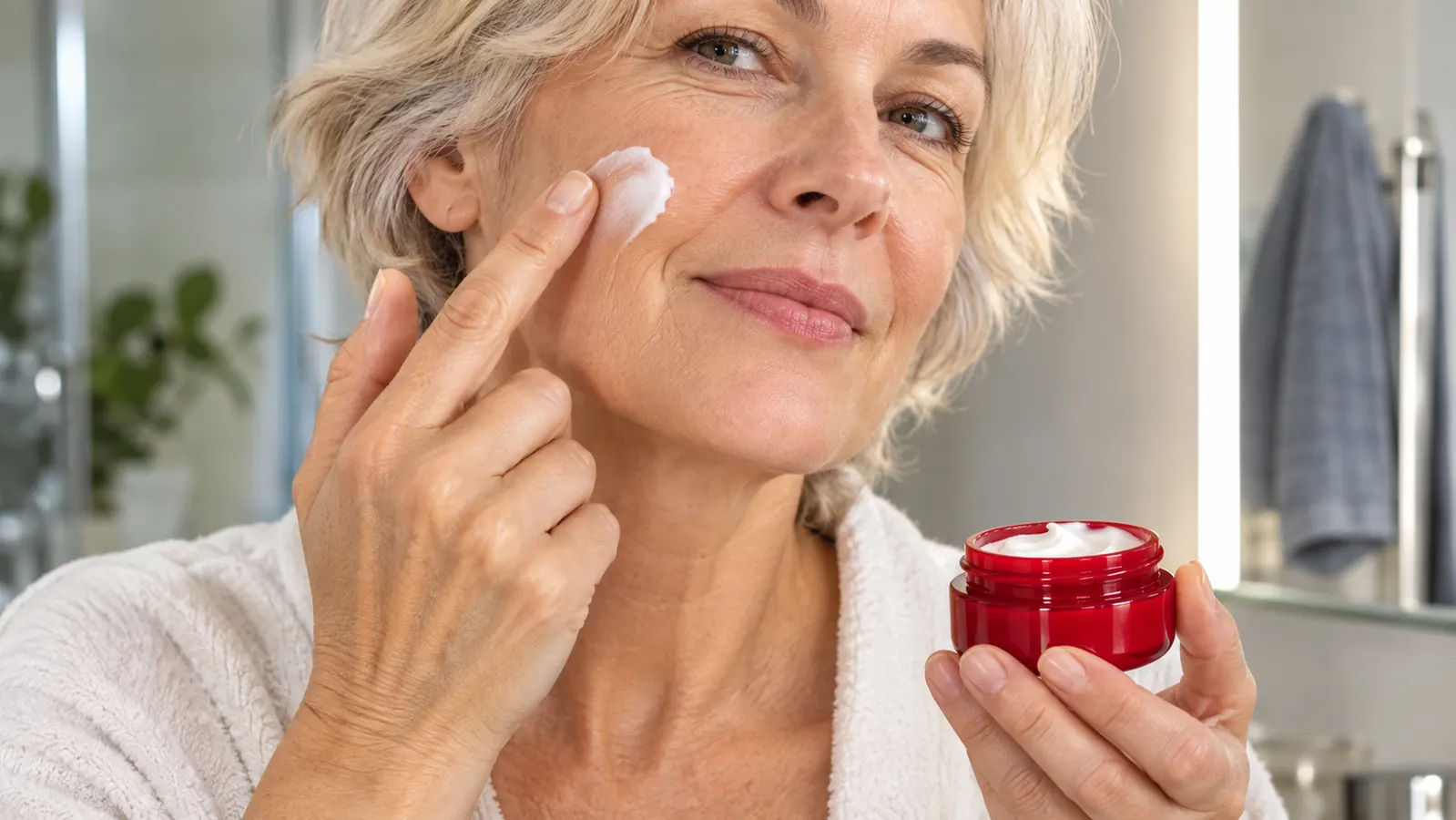
This is the change that made the biggest difference for me, and it costs nothing. After I pat my face dry I wait about thirty seconds. Not until it is dry and tight, just until it is not dripping, and then the cream goes on.
A cream works by holding onto water that is already there. On bone dry skin there is less to hold, so it sits on top and feels greasy. On damp skin it spreads further and sinks in. I use a rounded fingertip amount, rub it between my fingers for a second to warm it, and press it into my cheeks, my jaw, my forehead, and down my neck. Upward circles if you like circles. The direction matters less than doing the neck at all, which I skipped for about a decade.
What happened for me was this. Within about two weeks my cheeks stopped feeling tight. That was the first change I noticed from anything in this routine, and it is the only product I would give that credit to. My lines look about the same. I would rather tell you that than pretend a cream did something it did not do.
Step 3: Give it two weeks before you decide anything
I am a person who wants to know by Thursday. Skin does not work that way. The outer layer takes a couple of weeks to look and feel different, and that is with something as simple as a moisturizer. If you are also using a retinol or a vitamin C, give those three months. I started a retinol in March and did not feel a real change in texture until June.
The way I judge a product is not by staring in the bathroom mirror at seven in the morning. I judge it at three in the afternoon. Does my face feel tight? For most of February the answer was always yes. By the end of the month it was no, and it has mostly stayed no since, including through a Spokane winter and a hot dry August.
Write the start date on the bottom of the jar with a marker. It sounds fussy and it saves you a month of wondering, because you will not remember, and it is very easy to talk yourself into or out of a result when you cannot say when you began.
Step 4: Layer in order, thinnest first, and let each step dry
Once you have more than one product, order starts to matter, mostly because a thin serum cannot get through a thick cream. My morning is cleanser, vitamin C, eye cream, then the Olay, then sunscreen last. My night is cleanser, retinol on retinol nights, wait for it to absorb, eye cream, then the Olay again. Vitamin C is a morning job and sunscreen is a morning job. I do not use either one at night.
The waiting is the part people skip, including me for the first month. Thirty seconds to a minute between layers is plenty. If I rush the next step over the vitamin C it pills, and I end up with little rolls of product along my jaw that I have to wipe off with a tissue. That is not the product failing. That is me not waiting.
Only the eye cream goes near my eyes. The skin there is thin and it will let you know if you put the wrong thing on it.
Step 5: Change the amount with the season, not the product
In July and August the same jar that saves me in January feels heavy on my face. I do not go out and buy a different cream for summer. I use less of this one, a thinner layer, and on the hottest days I skip my neck. By October I am back to the full amount, and by December I am glad of it.
The other seasonal piece is sun. Dry skin and sun do not help each other, so sunscreen goes on every morning now, cloud or not. That is a habit I picked up this year and it took me about three weeks to stop forgetting. It goes on last, after everything else, and I wait a couple of minutes before I head out for my walk.
And if something stings, stop using it. Not everything suits everybody. A cream that burns is not a cream that is working, no matter what the label says.
What I Got Wrong First
I bought a scrub. Of course I did. If your face feels rough, the instinct is to sand it, and that is exactly backwards. A scrub on dry, tight skin is friction on top of friction. I used one twice a week for a month, my jaw got flaky, and I blamed the weather and the furnace.
I also used water as hot as I could stand it because it felt good first thing in the morning. It feels good for about ninety seconds and then your face is tight for the rest of the day. Lukewarm is less pleasant and it works better.
And I nearly bought four products in one week, which is the most common mistake I see women my age make. Not because any of them are bad, but because then you cannot tell what helped. I got lucky. I started with the cream first, and I know exactly what it did, because for those two weeks it was the only thing I was doing.
My cheeks stopped feeling tight in about two weeks. My lines look about the same, and I would rather tell you that than sell you something.
What Else Helps
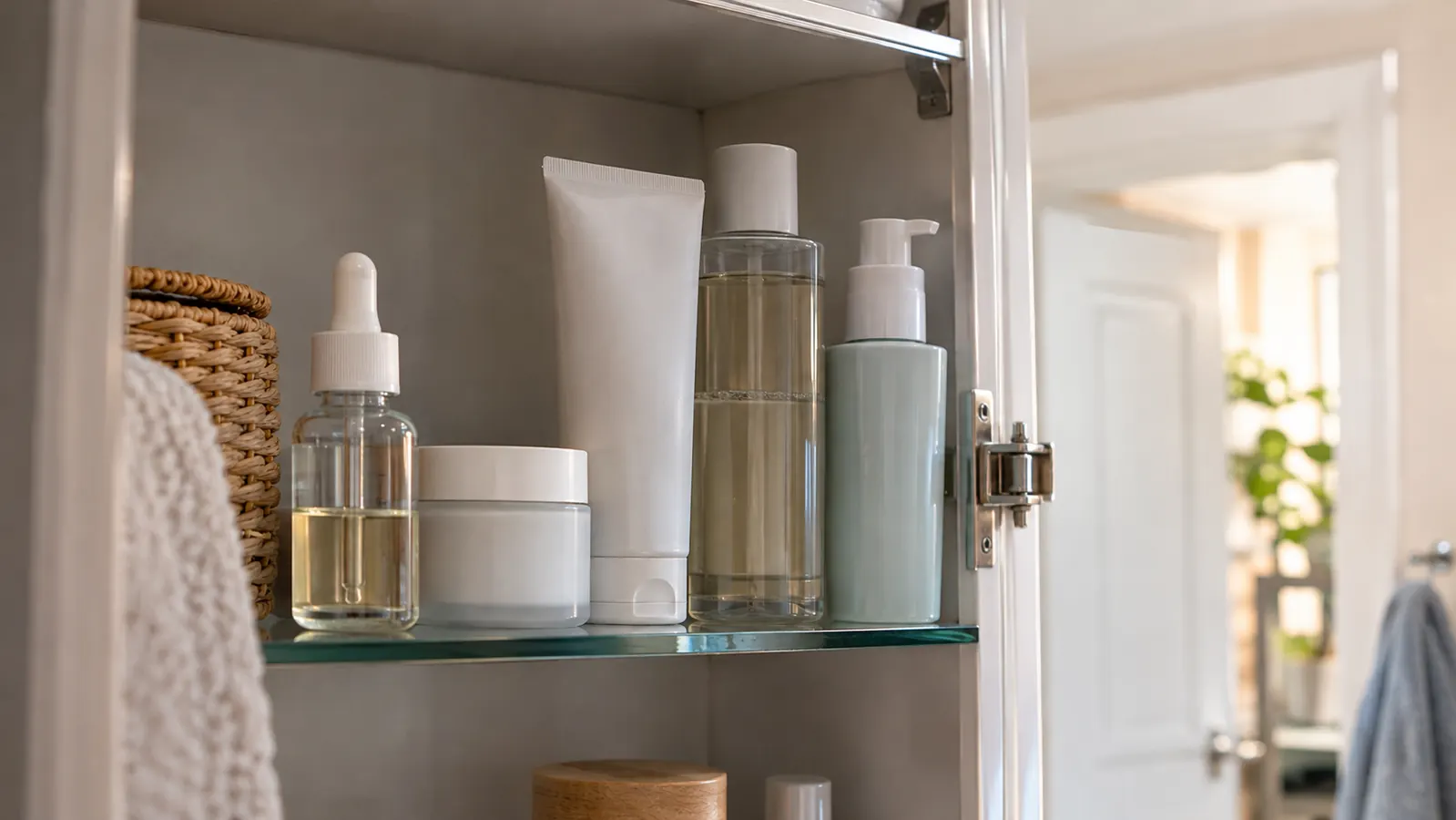
The cream was most of it, but not all of it, and the rest is either free or close to it. I run a humidifier in the bedroom from November through March. Spokane winters are dry enough that the house feels like a cracker by January, and once I started the humidifier my skin was less tight when I woke up. I cannot prove that with a chart. I just know what my face felt like.
I drink water through the day and I am not going to tell you it fixed my skin, because I do not believe it did. It is a good habit and I will leave it at that.
I stopped washing my face with hot water, which was harder to change than it sounds, and I stopped using anything with grit in it. If your skin is dry and tight, texture on texture is just friction wearing a nice label.
And I see a dermatologist once a year for a skin check. I would go sooner for anything that cracks, bleeds, itches without stopping, or shows up as a rash that does not settle in a week or two. A face cream is for comfort. It is not a treatment and it is not a diagnosis, and no jar on the shelf is going to tell you the difference.
If I were starting over today, here is what I would do. Buy the cream. Use it twice a day on damp skin for two weeks. Do not add anything else until you know what it did. That is the whole method, and it is boring, which is usually a sign it will work.
If your face is tight by three in the afternoon, start with the jar and give it two weeks
Olay Regenerist Micro-Sculpting Cream, 1.7 ounces, morning and night, face and neck. It is the dryness product in my routine, not the wrinkle product. Expect calmer, softer skin and you will not be disappointed. Expect a different face and you will be.
Amazon Check Today's Price on Amazon →